Our Saffron
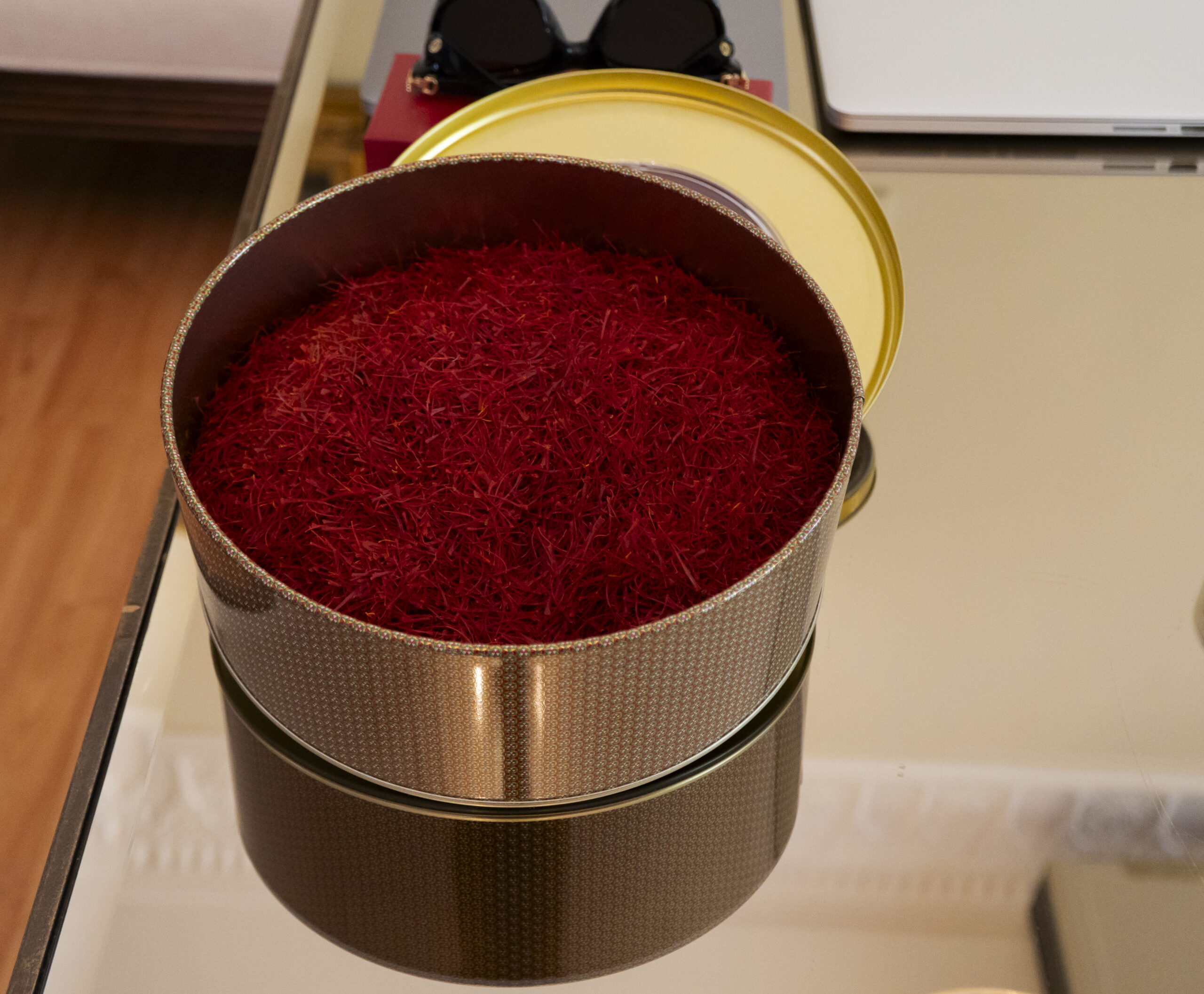
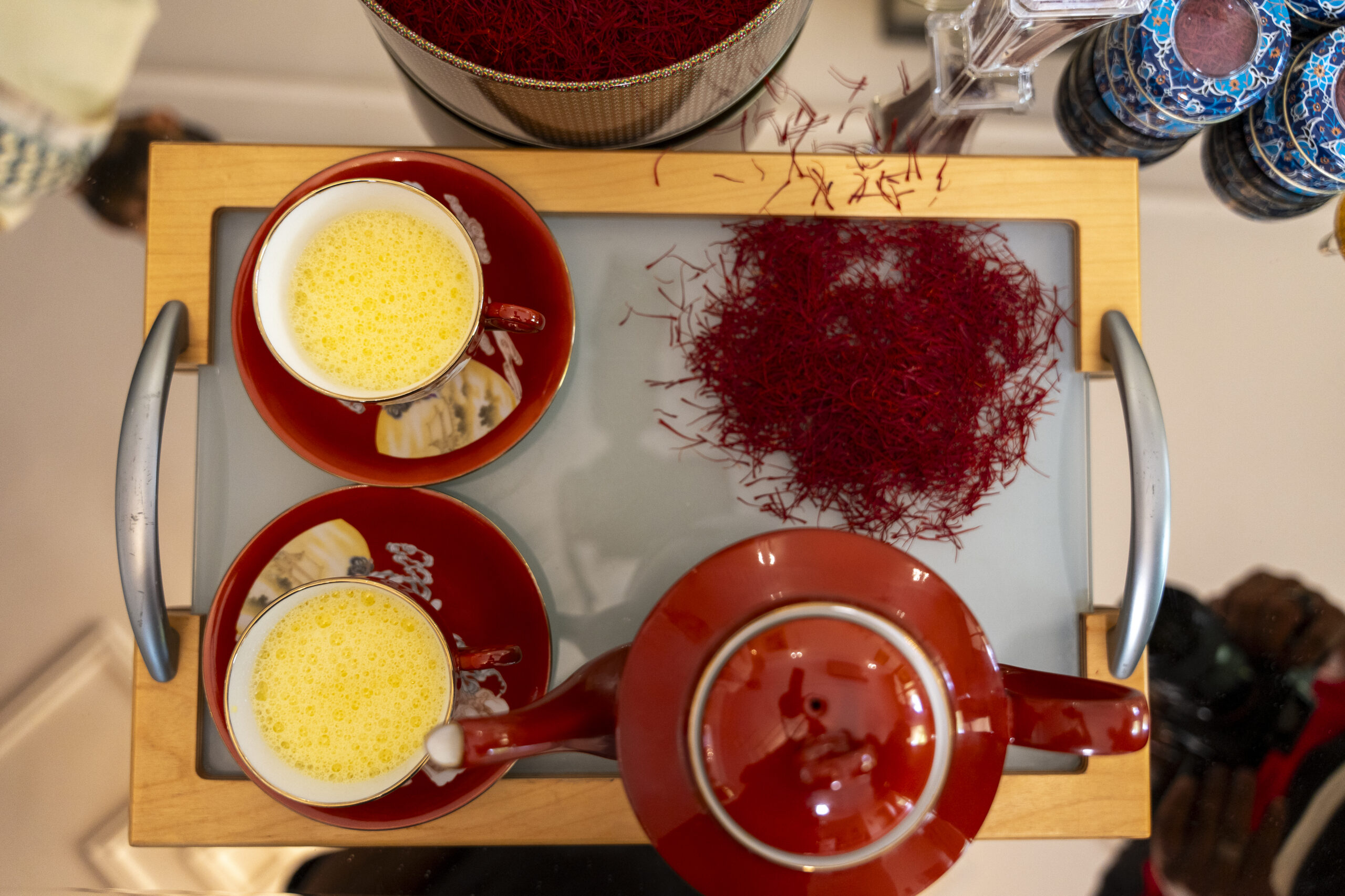
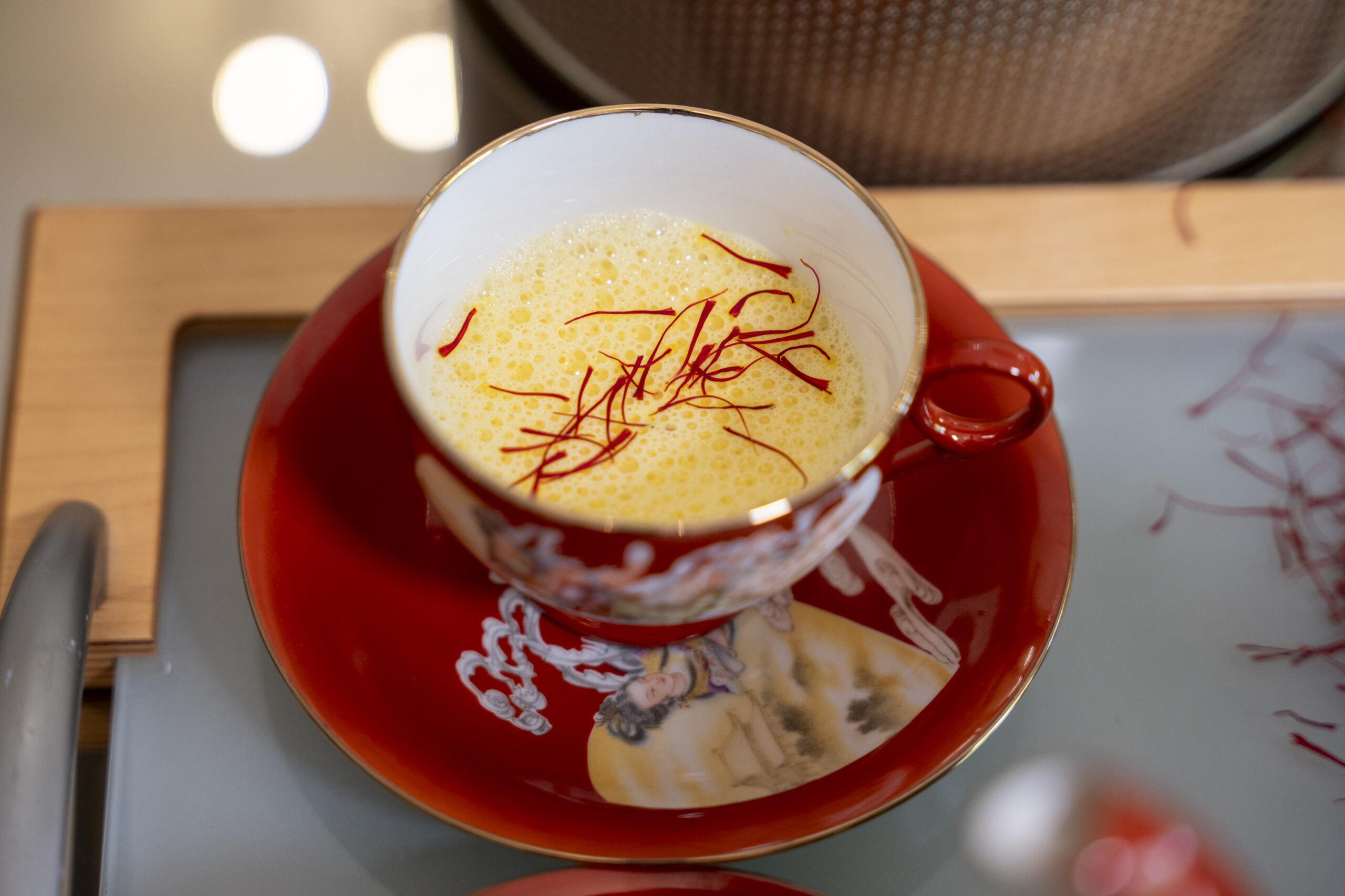
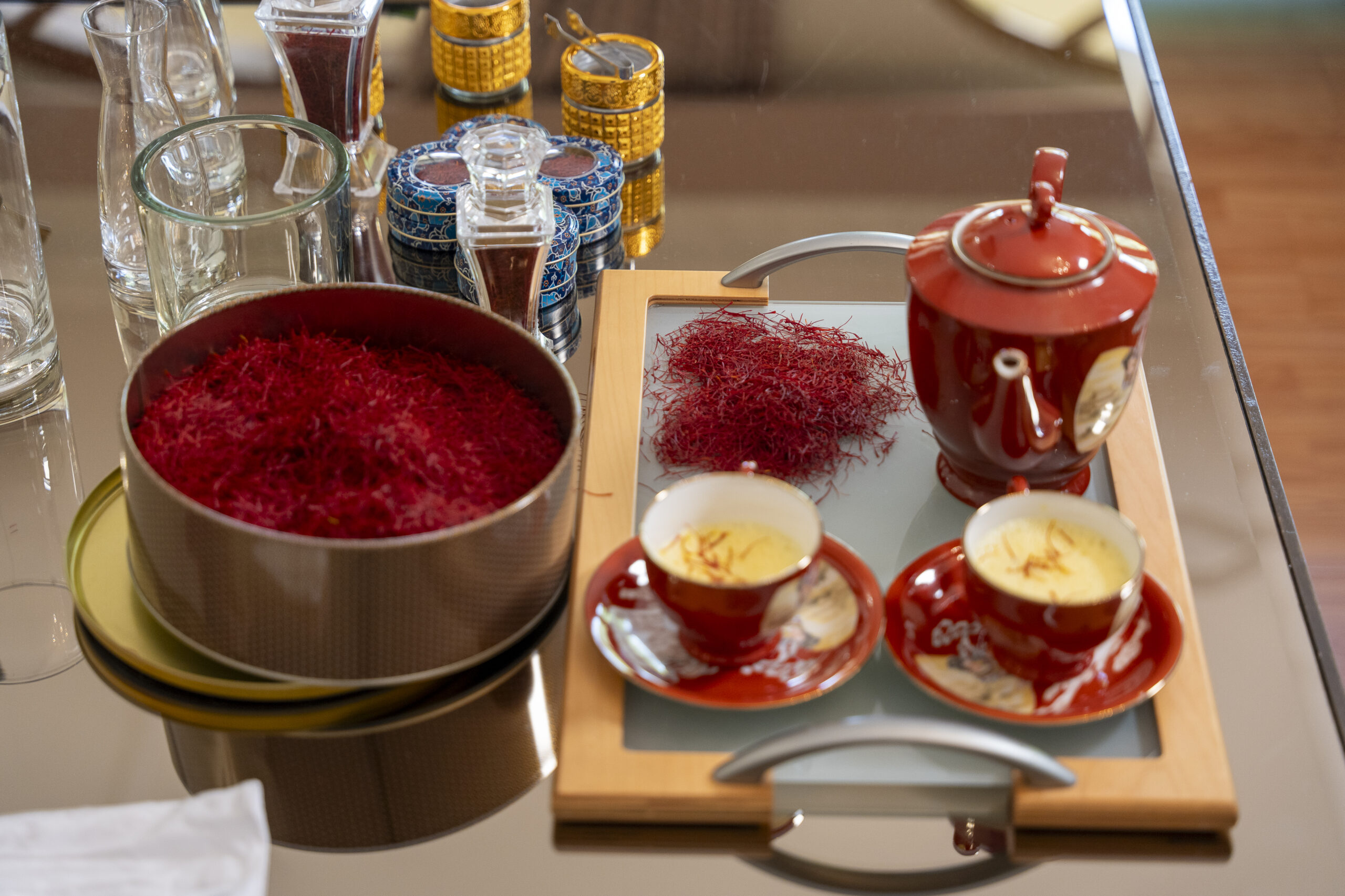
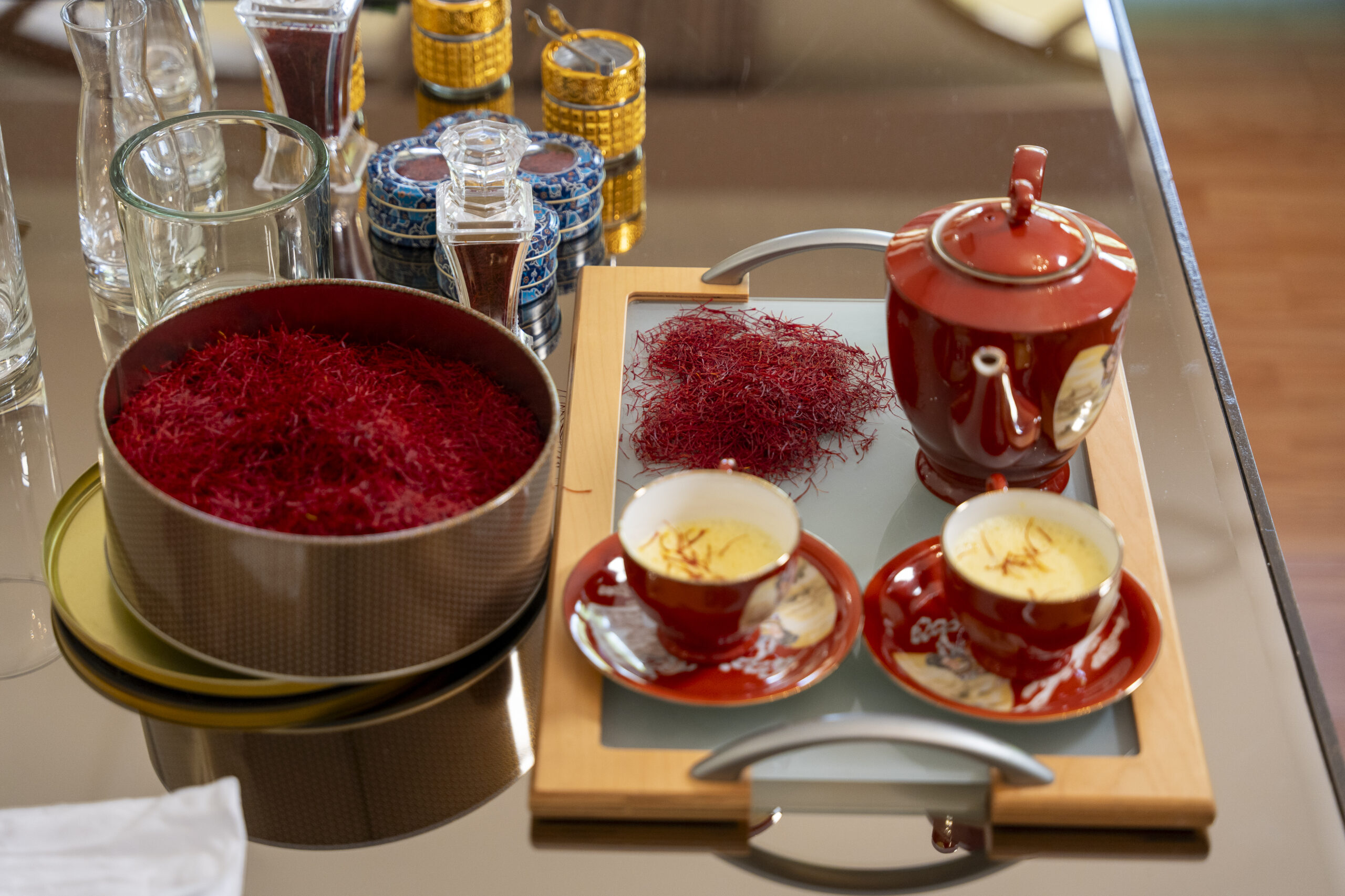
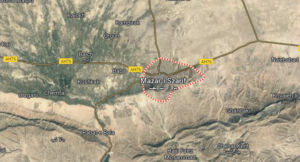
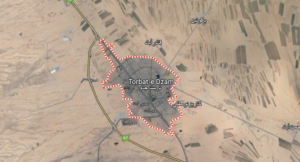
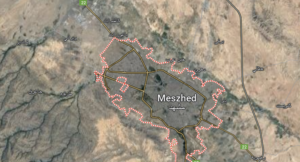
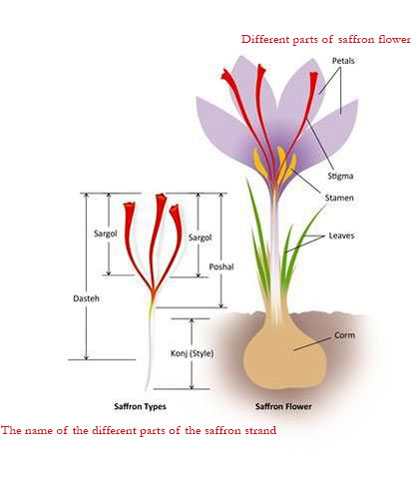
Saffron is known as red gold. It is produced from Crocus sativus, which is also known as the saffron flower. Naturally, the flower is home to 5-6 petals and red stigmas. The best saffron in the world comes from Iran and is cultivated in the province of Khorasan. It takes around 200,000 saffron flowers to produce 1 kilogram of pure Iranian saffron. The whole process of harvesting saffron must be done by hand as the flower and stigmas are so sensitive and delicate.
If you are interested in saffron, if you have any questions and you would like to get an offer, please do not hesitate to contact us. We guarantee its origine, traceability and the quality.
Royal Negin
Royal Negin saffron is one of the most luxurious varieties of saffron, valued for the intensity of its aroma, the taste and the colouring property. It is a rare variety that is often considered the highest standard among the saffron family. Here are its main characteristics:
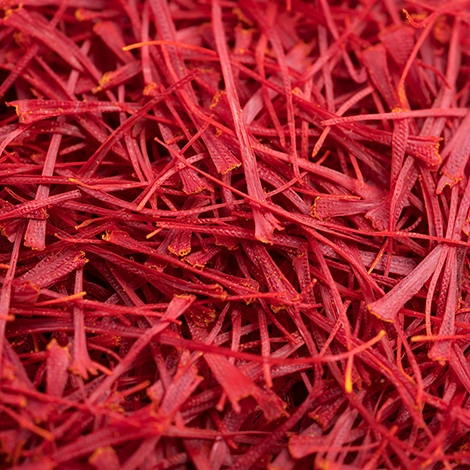
Appearance: Royal Negin saffron consists of long, thick and uniform red threads, which are selected with the utmost precision. The threads have grown more than in the other varieties, therefore the surface area is larger, and they are more aromatic.
Aroma: This variety of saffron has a very intense, deep aroma with clear floral, earthy and slightly honey notes. Due to the higher Concentration of essential oils, the scent of Royal Negin is more pronounced than in standard varieties.
Colour: Royal Negin has an extreme high crocin content, which gives the dishes an intense golden, almost orange colour. This is one of its most important characteristics, appreciated especially in kitchens where the colour of dishes has aesthetic significance.
Taste: The taste of Royal Negin is deep, rich and complex. It combines delicate, floral notes with a slight bitterness, meals take on a refined and balanced character. Its taste lasts longer compared to other saffron varieties.
Application: Royal Negin is mainly used in high-end kitchens and luxury restaurants. It is used in small quantities due to its intensity, which makes it perfect for paella, risotto, soups, as well as for desserts and drinks. It is also popular in the production of saffron extracts and infusions.
Royal Negin saffron is the essence of quality and luxury, offering the highest intensity of taste, aroma and colour. It is the perfect choice for the most demanding chefs and lovers of this precious spice.
Super Negin
Super Negin saffron is one of the highest quality saffron varieties, valued for its unique properties. Here are its main characteristics:
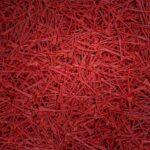
Length and appearance of the threads: Super Negin has long, thick and bright red threads, which are carefully selected. The long threads are only in the upper part of the crocus flower pistils, which give the saffron a unique appearance of high quality.
Aroma: Super Negin saffron is characterized by an intense, floral-earthy scent with sweet notes of honey. Its aroma is much stronger than other varieties.
Colour: Super Negin is distinguished by its ability to give dishes a deep, golden colour. This is possible thanks to the high content of crocin, a dye responsible for the characteristic colour of saffron.
Taste: This sort of Saffron has a complex, subtle taste that combines floral, earthy and slightly bitter notes, which perfectly balance the taste of the dishes.
Application: Due to its intensity, it is used in smaller quantities compared to other varieties. It is ideal for luxurious dishes such as risotto, paella, rice dishes, as well as in desserts or infusions.
Super Negin is a variety of saffron that is highly valued by chefs around the world for its properties.
Negin
Negin saffron is a high-quality variety of saffron, known for its intense aroma, rich colour and taste. Here are its main characteristics:
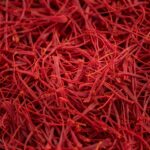
Appearance: Negin saffron strands are long, thick and have a vivid red colour. Unlike lower varieties such as Pushali, Negin does not contain white or yellow pistil fragments. This is a sign of its purity.
Flavour: Negin saffron has a strong, floral scent with subtle notes of earthiness and honey. Due to this intensity, its aroma is immediately recognised in dishes.
Colour: Negin saffron strands have a high crocin content, which is responsible for the colouring. This property allows the Negin saffron to give the dishes an intense golden colour.
Taste: Negin saffron offers a delicate, complex flavour, in which you can detect floral, slightly spicy and bitter notes that combine perfectly with different ingredients.
Uses: Due to its intensity, it is widely used in cuisines around the world to prepare dishes such as paella, risotto, rice dishes, soups and desserts.
Negin saffron, not as expensive as Super Negin, is highly valued and is a high quality saffron that offers an exquisite quality flavour.
Coupe
Coupe is the highest quality saffron, often considered the best variety available on the market. It is particularly valued in the catering industry due to its extraordinary properties. Here are its main characteristics:
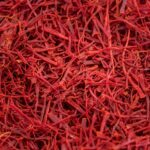
Appearance: Coupe saffron consists exclusively of the intensely red tips of the crocus flower pistils, which means that it is free from yellow and white elements. The purity of these threads is reflected in the intensity of their colouring and aromatic properties.
Aroma: Coupe saffron has a very strong, characteristic scent with clear floral and earthy notes, and a slight touch of honey. Due to the high concentration of volatile aromatic oils, its scent is more intense than other varieties.
Colour: Coupe is characterized by the highest crocin content, which gives dishes an extremely rich, deep golden colour. This is one of the main reasons why this saffron is so appreciated.
Taste: Its taste is intense, with clear, complex floral and slightly bitter notes that enriches dishes, giving them a unique character.
Use: Thanks to its intensity, Coupe saffron is used in very small quantities, which makes it extremely economical, despite its high price. It is often used in luxury cuisine for dishes such as risotto, paella, as well as in soups, infusions and desserts.
Coupe saffron, being the pure essence of this spice, offers the highest quality, both in terms of aroma, taste and its colouring capacity.
Pushali – A
Pushali saffron (Grade A) is a slightly lower quality saffron variety compared to higher grades such as Super Negin or Coupe, but it is still valued for its aromatic and colouring properties. Here are its main characteristics:
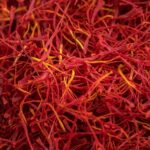
Appearance: Pushali saffron contains both threads: the red and the yellow ones in its base, which distinguish it from the higher grades. The yellow part reduces the intensity of the saffron properties, but it also makes the product more affordable.
Flavour: Pushali offers a rich, although slightly weaker aroma compared to higher grades such as Negin or Coupe. Nevertheless, its fragrance is intense enough to enrich dishes with floral and earthy notes.
Colour: Pushali saffron threads have a lower crocin content, which makes its ability to colour dishes a deep golden colour slightly lower compared to the highest grades. Despite this, it still gives dishes an attractive hue.
Taste: Its flavour is complex, with subtle floral and bitter notes, however not as intense as the pure red threads of the higher varieties.
Uses: Due to its lower price, Pushali saffron is popular in-home cooking in everyday dishes, such as soups, rice and meat dishes, where the saffron flavour and colour are desirable but not necessarily indispensable.
Pushali saffron (Grade A) is a good option for those, who are looking for a compromise between price and quality, while still offering satisfying culinary properties.
Pushali – B
Pushali B is a lower quality saffron compared to grade A and to higher categories such as Negin or Coupe. It is characterized by a greater amount of yellow parts of the pistil and a lower intensity in the taste, the aroma and the colour. Here are its main characteristics:
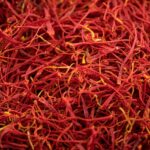
Appearance: In Pushali B saffron, the threads have more yellow bases, which affects its purity. Only the upper parts of the pistils are red, while the rest is yellowish. This reduces the overall intensity of its colouring and aromatic properties.
Aroma: The aroma of Pushali B saffron is perceptible, but weaker compared to higher grade varieties. Although it still has floral and earthy notes, its intensity is much lower, making it less pronounced in the gastronomy.
Colour: Pushali B saffron has a lower crocin content, which means that its ability to colour dishes to an intense golden colour is limited. Dishes take on a more delicate, less saturated shade.
Taste: The taste of this saffron variety is more subtle and less pronounced than the higher grades. There are still subtle floral and slightly bitter notes, but they are not as strong as the pure red strands.
Uses: Because of its lower price, Pushali B saffron is used in simpler, everyday dishes where the intensity of colour and aroma is not relevant. It can be used in rice dishes, soups, and other dishes where a slight boost of flavour and colour is desired.
Pushali B saffron is an economical option for those looking for a cheaper version of saffron that still adds subtle flavour and colour to dishes, although less extent than the higher grades.
Bunch
Bunch saffron is one of the most traditional forms of saffron, characterized by the fact that the whole saffron threads (the red and the yellow parts of the pistils) are tied into small bunches. It is a variety of medium quality, lower than Negin or Coupe, but still used for its colouring and aromatic properties. Here are its main characteristics:
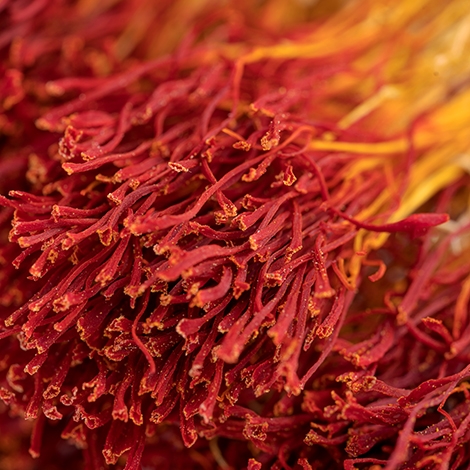
Appearance: In Bunch saffron we can find both red and yellow parts of the threads. The red parts are the most valuable, while the yellow (i.e. the lower parts of the pistils) have less aromatic and colouring value but they are still present in the bunch.
Flavour: The flavour of Bunch saffron is more delicate than the pure, red-threaded varieties. While there are still floral and slightly bitter notes, the flavour is not as strong and complex as the most expensive versions.
Color: The ability of Bunch saffron to color dishes is limited due to the presence of the yellow parts of the threads, which contain less crocin. However, it can still impart a delicate golden hue to dishes, although not as intense as the higher-end varieties.
Flavor: The flavor of Bunch saffron is more delicate than that of pure red-threaded varieties. While there are still floral and slightly bitter notes, the flavor is not as pronounced and complex as the more expensive versions.
Uses: Bunch saffron is often used in everyday dishes where the intensity of colour and flavour is not crucial. It is suitable for dishes such as rice, soups, stews, and sweets, where the subtle aroma and colour of saffron are enough to enhance the flavour.
Bunch saffron is a more economical option that allows you to enjoy the benefits of saffron, although its intensity and quality are lower than the higher grades.
White Saffron
White saffron, also known as konk, is the part of saffron that is located at the bottom of the flower pistil. It is the white and light-yellow part of the thread. In fact, it is not the proper saffron (the red part of the thread), but the white part of the crocus pistils, which does not contain the main substances responsible for the intense colour, the aroma and the taste, typical of red saffron. Here are its characteristics:
Appearance: White saffron is the lower part of the crocus pistils, which is white and light yellow in its colour. It does not contain the red threads, which are the most valuable part of saffron.
Aroma: Unlike the red threads, white saffron has a very delicate, almost imperceptible aroma. It lacks compounds that are responsible for the intense smell, such as safranal, which makes its aromatic properties more limited.
Colour: White saffron has no colouring properties because it does not contain crocin, the pigment responsible for giving dishes their characteristic golden colour. Therefore, it is not used in the gastronomy.
Taste: White saffron has a very subtle taste that is not as pronounced or complex as the taste of red threads. The lack of characteristic bitterness and floral notes makes its impact on dishes minimal.
Uses: White saffron is rarely used in cooking due to its low intensity of aroma, taste and lack of colouring properties. It is sometimes used in traditional medicines, mainly in some cultures, where it is attributed with milder health properties compared to red saffron. It can also be added to dishes, but rather for decorative than for flavour purposes.
White saffron is a part of saffron with minimal culinary value, used mainly for decorative purposes or in medicine, but it does not have the same flavour and colouring value as classic red saffron.
Application